About Vote-Scope
About Vote-Scope
Independent election forecasts for the United States, Canada and Europe, in English, French and Spanish. Founded and led by Kim Leclerc, who has spent more than twenty years inside election campaigns.
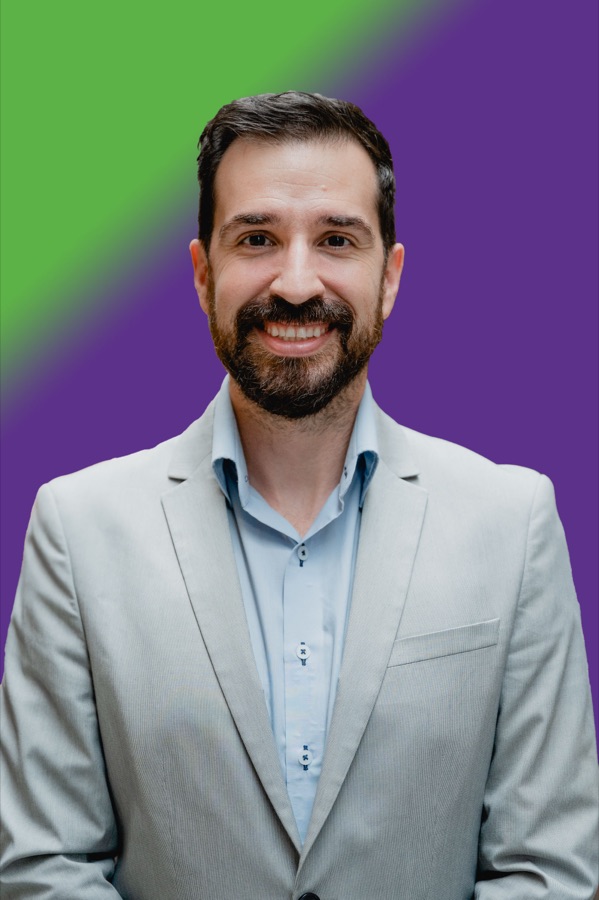
Who builds the forecasts
I’m Kim Leclerc. I’ve done every job a campaign has. I’ve knocked on doors, run voter ID, raised money from small donors and big ones. I’ve been a chief organizer, a leadership-race communications director, a delegate, and a candidate with my face on the lampposts. I’ve swept the floor of a campaign office and worked national war rooms on the line with the leader’s bus. I’ve also served as a political adviser and chief of staff.
Inside a major party, I rewrote the campaign organization guide, built its first social media guide and trained its first elected members to use it. I was among the first in Quebec to push for data-driven campaign software modeled on American campaigns. I’ve worked the ground in France during European elections, and knocked on doors and made calls in the United States. Today I talk regularly with Canadian pollsters.
When the whole room looks the same way
On the eve of the 2016 U.S. election, I was an adviser to a Canadian cabinet minister. At the weekly meeting of regional advisers in the Prime Minister’s building, everyone around the table was planning for a Clinton win. I raised my hand. From what I saw in the polls and on the ground, Trump would outperform and carry the swing states.
It wasn’t the first time. In 2015, with Justin Trudeau’s Liberals in third place and everyone expecting the NDP to replace Stephen Harper, I said Trudeau would win, and win a majority. People laughed. In 2008, I was among the first in Canada to say Barack Obama would beat Hillary Clinton for the Democratic nomination.
What Vote-Scope does
Vote-Scope turns that experience into math. Each forecast runs on dozens of modules built for each jurisdiction: regional patterns, how each pollster usually misses, and what a campaign moves on the ground before the numbers show it.
Every week, those modules are tested against dozens of past elections in the U.S., Canada and the U.K. When the data looks wrong, nothing is published until the model is fixed. When a forecast moves, we check that it’s a real shift and not a glitch. That is also why we forecast by-elections, which almost nobody else models.
Quebec, October 5, 2026
- Less than one point of average error on party vote shares.
- Government called at 8:27 p.m., minority called at 9:22 p.m., ahead of Radio-Canada.
Transparency
I have worked for major political parties in Canada at the municipal, provincial and federal levels, and in campaigns in France and the United States. Vote-Scope works for no party. The polls we use, the method and our misses are all published.
Selected interviews and media mentions
In the public record.
Interviews and articles where Kim Leclerc and Vote-Scope’s projections were cited.
The last Quebec projection before the vote
An interview on the final Vote-Scope projection: the ridings that would decide a majority and where the Conservatives could surprise.
Open sourceQuebec election: the PQ leads, a majority still uncertain
A region-by-region reading of the race, including the Conservatives becoming competitive in Centre-du-Québec and on the South Shore.
Open sourceLaunching Vote-Scope’s electoral projection model
An interview about the Bayesian model, its first Canadian forecasts and the project’s public-data approach.
Open sourceAir Canada governance and crisis management
A television interview on governance, accountability and institutional crisis response.
Open sourcePolitical debates and leaders’ preparation
Analysis of political communication, debate preparation and party strategy during a federal election campaign.
Open sourceF-35 costs and alternatives for allied countries
Expert commentary on procurement risk, rising program costs and European fighter-aircraft alternatives.
Open source